Request a sample

Pemba Island · Zanzibar · FAO 51

One fish
at a time.

A no-net handline fleet working the Pemba Channel. Each fish is taken on a single hook, iced on the boat, frozen the day it lands, and recorded against the boat and the person who caught it.

Gear
Hook & line only
Time to ice
Target under 15 min
Frozen
Day of landing
Held at
−30 °C
Handline is 49% of all fishing activity in Zanzibar — JICA 2024Pemba lands 38% of Zanzibar's catch across 126 landing sitesFrozen the day it lands · held at −30 °C · a HACCP facility on the wayPublished research puts line-caught bycatch at 0.65% vs 28–36% for longlineEvery fish recorded at landing: vessel, skipper, site, date, weightWe publish the species where the stock status is badHACCP-certified facility for Pemba — coming soonHandline is 49% of all fishing activity in Zanzibar — JICA 2024Pemba lands 38% of Zanzibar's catch across 126 landing sitesFrozen the day it lands · held at −30 °C · a HACCP facility on the wayPublished research puts line-caught bycatch at 0.65% vs 28–36% for longlineEvery fish recorded at landing: vessel, skipper, site, date, weightWe publish the species where the stock status is badHACCP-certified facility for Pemba — coming soon

The problem with the category

Anyone can print a
fish on a label.

Seafood is the hardest food category in the world to verify. Species get substituted, catch areas get rounded to an ocean, and “sustainably sourced” is a phrase with no legal definition anywhere.

So we stopped making claims and started publishing records. Every number on this site carries the date it was measured, the organisation that measured it, and a link to the source. Where the evidence is weak, we say the evidence is weak. Where a stock we sell is in trouble, we publish that too.

Read what we cannot claim

“A claim you cannot check is marketing. A record you can check is a receipt.”
Samaki Bluu · Sourcing principle 01

The landings ledger

Every fish gets a number.
Today the record is a landing sheet.

When a boat lands, each fish is weighed, graded and given a lot number, and the sheet records the vessel and its registration, the skipper, the landing site, the date and the whole weight. That is what we can show a buyer today, for every fish, and it is written down by a person, not measured by an instrument.

We are not going to dress that up. There is no tracker on the boats yet, no probe in the ice bin, no logger on the freezer. The digital lot record — catch position and time from a vessel tracker, minutes to ice from a bin probe, the freeze curve from the tunnel controller, a lookup on this page — is what the facility we are building is designed to produce. When it exists, this section changes. Until then, the ledger below is the honest version.

Recorded today, by hand

On the landing sheet

Lot number
Written on the fish tag at landing
Vessel
Name and Zanzibar registration
Skipper
Named, with licence checked where held
Landing site
Wete, Chake Chake or Mkoani
Date
Day of landing
Weight & grade
Whole weight, grade, any downgrade reason
In development

What the facility adds

Catch position and catch time from a vessel tracker. Time to ice from a probe in the slurry bin. The full freeze curve from the tunnel controller. A code on every carton, and a lookup on this page that resolves it to all of the above. Each of these will be marked measured only when an instrument measured it.

About the facility

Why hook and line

One hook. One fish.
Nothing else comes up.

A handline catches one fish at a time, by hand, and anything unwanted goes back in the water alive. There is no net to sort through, no wall of mesh, no fish aggregating device.

This is not a technique we invented. It is how Pemba has fished for generations — and it happens to be the lowest-impact commercial gear there is. Independent research on the closest comparable fishery, the Maldivian pole-and-line tuna fleet, recorded bycatch at 0.65% of the tuna catch, with dead discards at 0.02%. Indian Ocean purse seine runs about 4.7%. Longline runs 28–36%.

Read that carefully. That 0.65% figure is measured in the Maldives, on pole-and-line gear, not on our boats in Pemba. It is the closest published analogue to what we do, and we quote it as an analogue — not as our own result. We have not yet published observer data of our own. When we do, it will be here, with the methodology attached.

Miller et al. (2017), “Bycatch in the Maldivian pole-and-line tuna fishery”, PLOS ONE 12(5): e0177391. Comparator figures for purse seine and longline from the same paper.

0.65%
Bycatch, pole-and-line tuna fishery — the closest published analogue to handline
Miller et al., PLOS ONE, 2017
4.7%
Bycatch, Indian Ocean purse seine, 2003–09
Miller et al., PLOS ONE, 2017
35.8%
Bycatch and discards, Taiwanese longline fleet
Miller et al., PLOS ONE, 2017
49%
Share of all Zanzibar fishing activity that is handline
JICA fisheries survey, 2024

Our species

Four species. Four
different honest answers.

Yellowfin tuna — Thunnus albacares

Yellowfin tuna

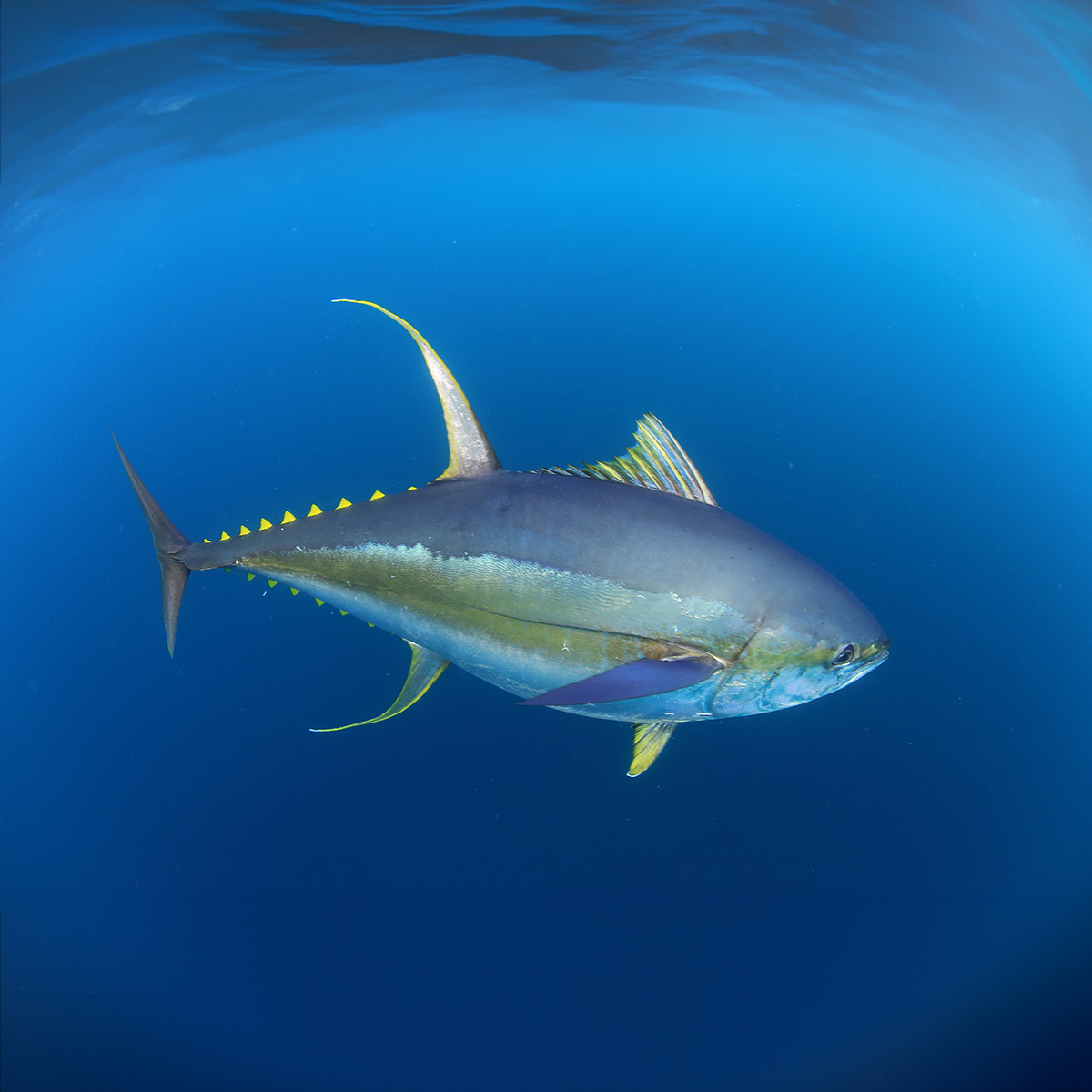
Thunnus albacares · Kiswahili: Jodari

Sleek, metallic blue-black back over yellow flanks. Our principal species and the one our handline fleet is built around — sold to mainland Tanzania today, graded to an export specification for tomorrow.

Handline, single hookIOTC 2024: not overfished
Dorado — Coryphaena hippurus

Dorado

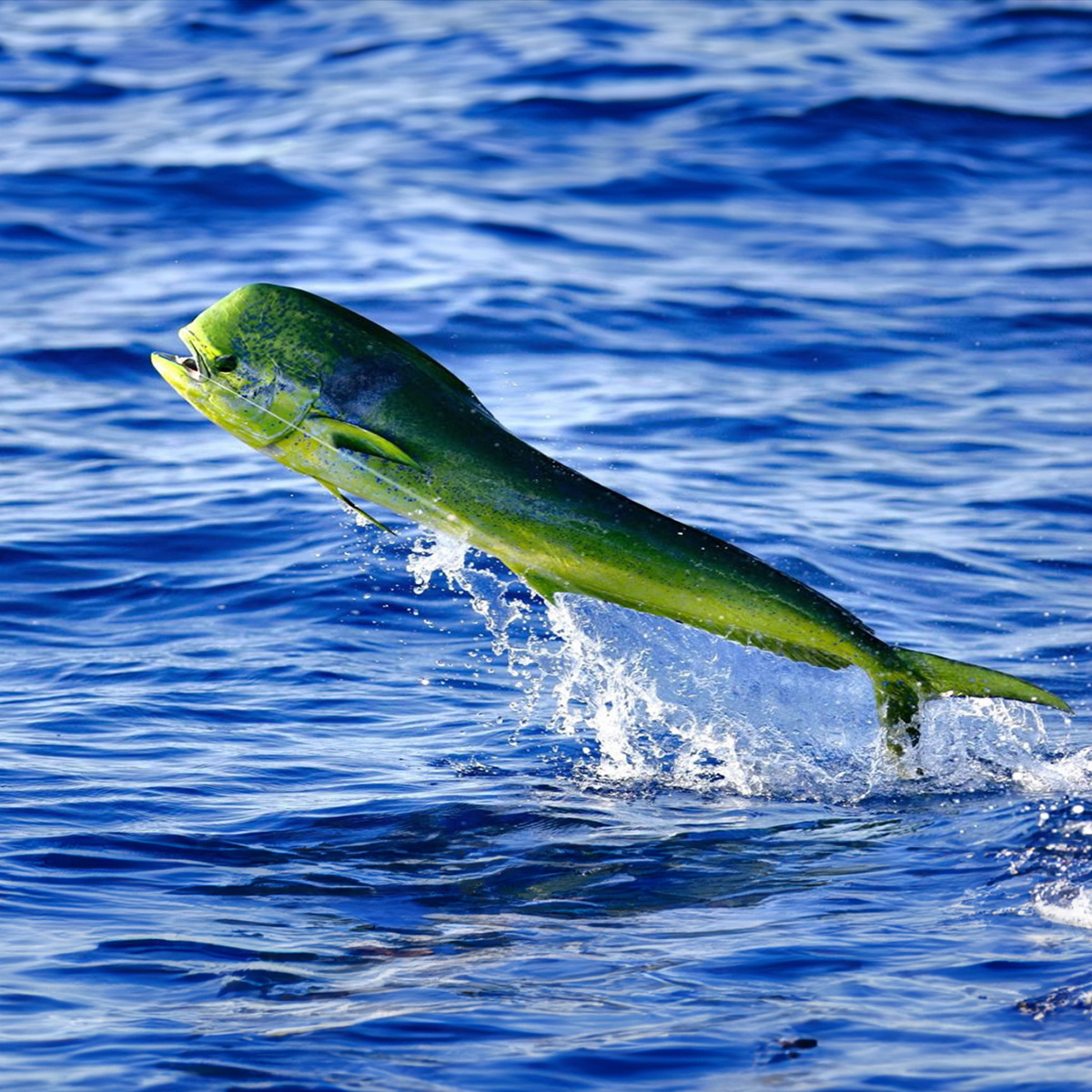
Coryphaena hippurus · Kiswahili: Fulusi

Mahi-mahi. Iridescent blue-green back, golden flanks. A fast-growing species that reaches maturity in four to five months.

Troll line, barblessNo regional stock assessment
Kingfish — Scomberomorus commerson

Kingfish

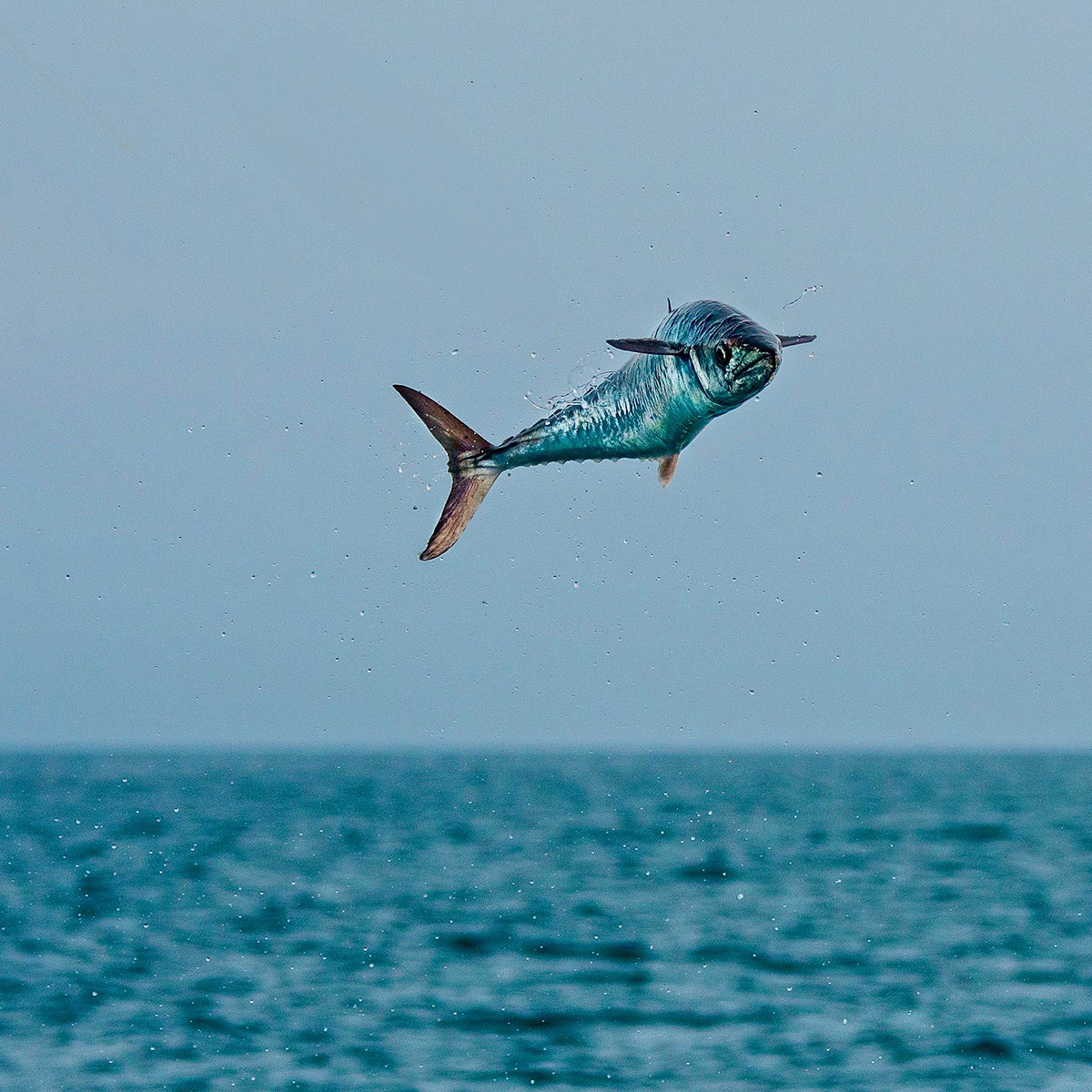
Scomberomorus commerson · Kiswahili: Nguru

Narrow-barred Spanish mackerel. Torpedo-bodied, greenish-blue over silver. Firm, dense flesh that holds a steak cut.

Handline, single hookIOTC 2023: overfished
Red snapper — Lutjanus spp.

Red snapper

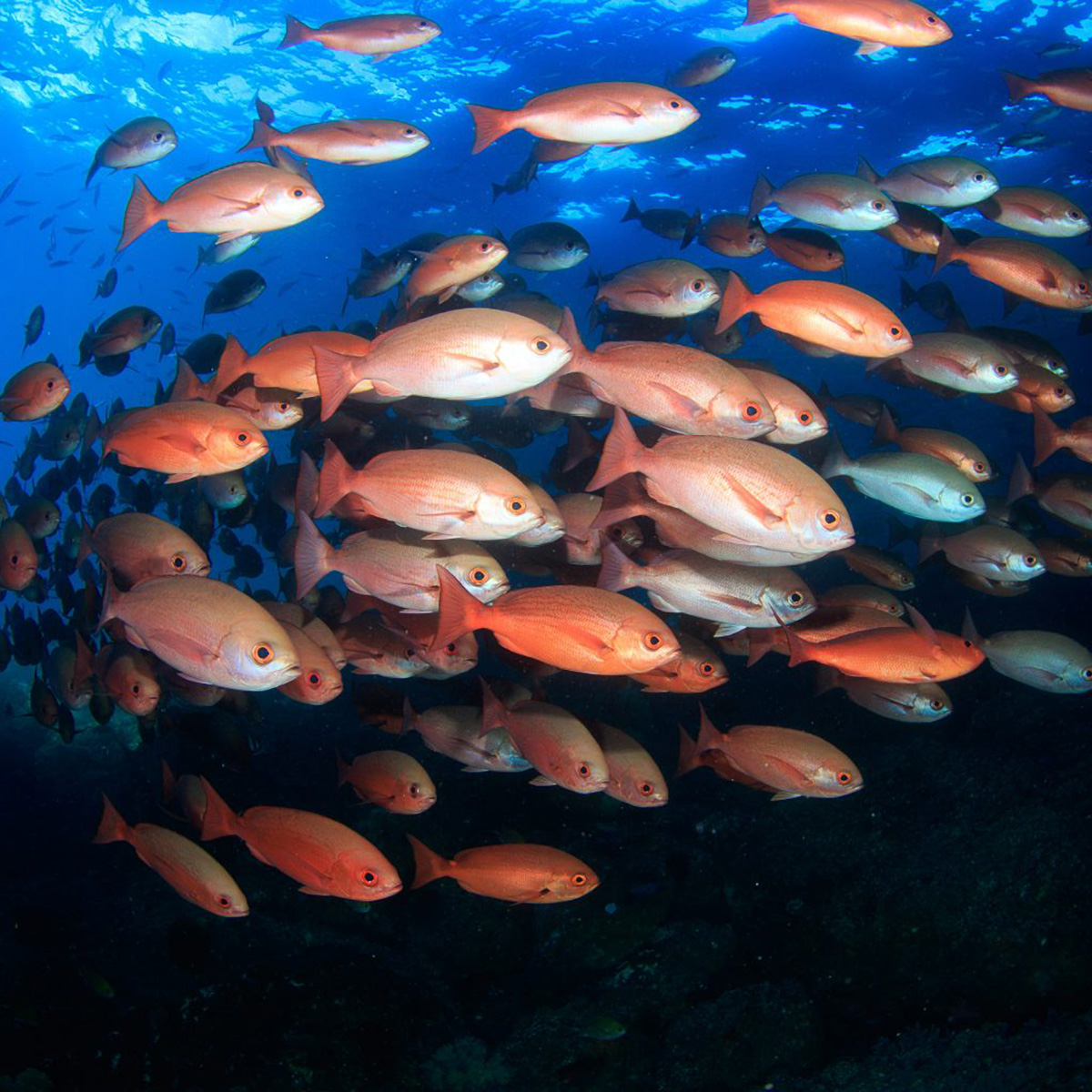
Lutjanus spp. · Kiswahili: Tembo

Reef-associated snapper from the outer shelf slope. Pale rose flesh, clean flavour. Sold to genus, with DNA confirmation on request.

Handline, single hookNo WIO assessment exists

Stock status per IOTC Scientific Committee status summary, 2025 (assessment years vary by species). Dorado and snapper carry no regional assessment — see Sustainability for what that means and how we handle it.

Full specifications and grades

The cold chain

Warm fish is
cheap fish.

Zanzibar's documented weak point is ice. A 2024 survey of the archipelago's fisheries found that across 235 landing sites, “the use of ice is rare” — with essentially one 2.5-tonne-a-day ice machine and a single freezer truck serving the islands.

That is the gap we exist to close. Not a slogan — an infrastructure problem with a measurable answer.

How blast freezing actually works

JICA, Information Collection Survey on the Fisheries Sector in Zanzibar, final report, January 2024.

−30°C
Where we freeze and hold today. Well below the legal floor; short of where we want to be.
Samaki Bluu cold store, checked and written down daily
−18°C
The legal floor for frozen fishery products in the EU. Everything below it is a choice.
Reg. (EC) 853/2004, Annex III §VIII
−45°C
The hold temperature the new facility is specified to reach — the point where tuna colour stops moving
Planned · Nakazawa et al. 2020
<15min
Target from fish aboard to slurry ice — histamine control starts on the boat
Samaki Bluu operating standard · target, not yet measured

Where we are, and where we are going. Today our store runs at −30 °C — legal, and honestly stated. Peer-reviewed work on tuna stored for up to sixteen months found that metmyoglobin browning — the reaction that turns red tuna brown — stops entirely at −45 °C or colder, regardless of the meat's pH. That is why the facility we are building is specified to −45 °C, and why we will not describe our current product as super-frozen until it is.

Nakazawa, Okazaki et al. (2020), International Journal of Refrigeration 112: 270–280. DOI 10.1016/j.ijrefrig.2019.12.012

Next

Ask us for the thing
nobody else will send you.

A sample box, with the landing record for every fish in it — vessel, skipper, landing site, date and weight — and a straight answer about what we do not record yet.